It’s just seven to 20 guys; that’s all you have facing an angry mob. Being in that headspace is important. Your back is really against the wall.”
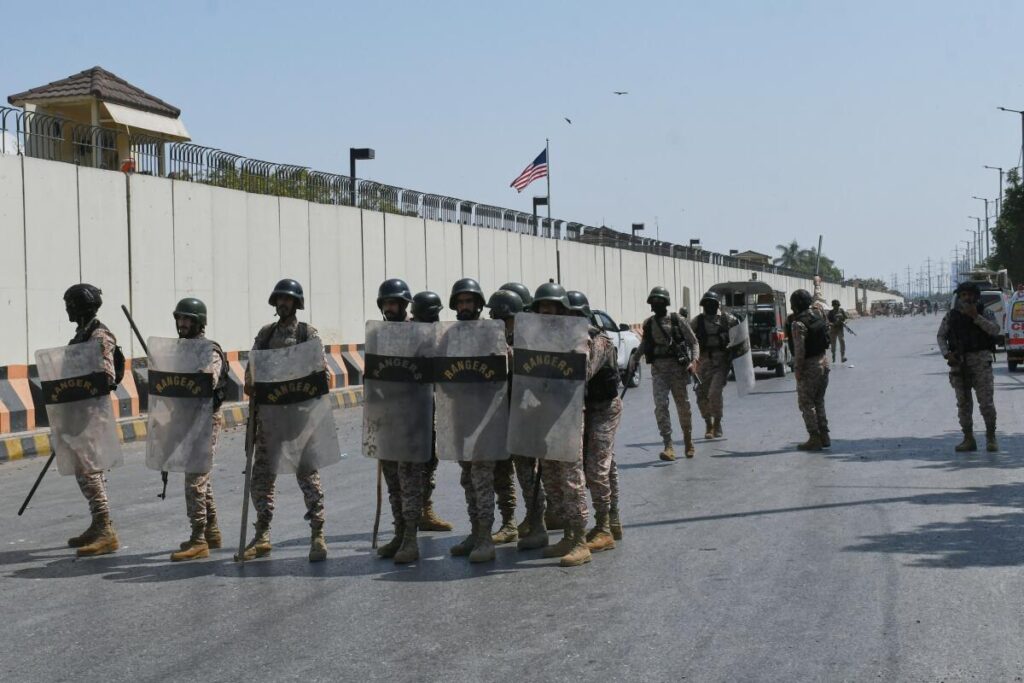
Marines assigned to the U.S. consulate in Karachi, Pakistan, recently fired their weapons in self-defense after they were attacked by protestors who had breached the facility, a U.S. official told Task & Purpose.
Reuters first reported that the Marines had fired their weapons when protesters tried to storm the consulate on Sunday following the death of Iran’s Supreme Leader Ayatollah Ali Hosseini Khamenei, who was killed the day prior during air and missile strikes against Iran launched by Israel and the United States.
Ten people were killed during the incident, but it is unclear whether any of the attackers were hit by the Marines or by other forces, including private security guards and local police, according to Reuters.
“The Marines took appropriate defensive measures to protect themselves and de-escalate the situation,” the U.S. official said. “Any actions that resulted in the discharge of weapons were justified, given the consulate facility and Marines were attacked. There was no further incident.”
Little information about the incident has been publicly released. A spokesperson for the U.S. embassy in Islamabad, Pakistan, referred questions on the matter to the State Department in Washington, D.C., which referred an earlier query on the matter to U.S. Central Command, which referred questions back to the State Department.
The United States maintains an embassy in Islamabad, Pakistan, and it has consulates in Karachi, and elsewhere in the country. Consulates offer services to American citizens, including providing passports and emergency assistance.
Embassy duty and Marine Security Guards
Marines assigned to U.S. embassies and consulates receive regular training about exactly when they can use lethal force, said Ryan Fitting, who served as a Marine Security Guard from 2013 to 2016, during which he was posted to Luanda, Angola; Chengdu, China; and London.
“They take it very seriously,” Fitting told Task & Purpose. “They train it really hard and they reinforce it very hard, at least when I was in.”
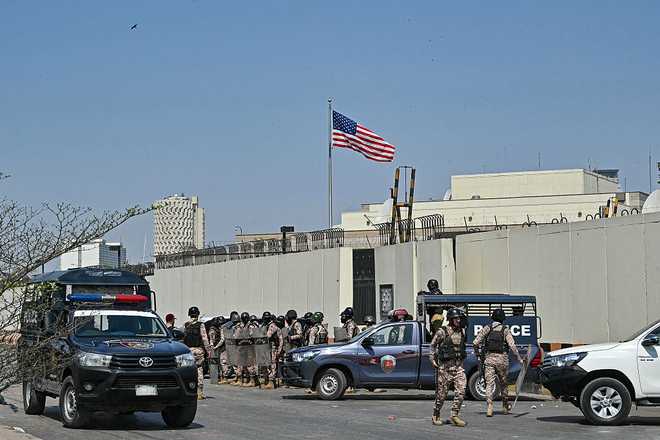
Each diplomatic post is protected by both outer walls and inner security systems that are difficult to defeat without heavy machinery and equipment, Fitting said. If the exterior walls to a compound are breached, Marine security guards’ top priority would be protecting diplomatic personnel and be ready to destroy classified material if needed, he said.
“The key is if a person has the means, intent, and opportunity to cause harm, then they are authorized to use lethal force,” Fitting said.
One example of such a situation would be if a person with a weapon got inside an embassy, Fitting said. That person would have both the means and the opportunity to harm embassy personnel.
“We would do drills where there would be a suicidal man that had a gun to his head,” Fitting said. “We didn’t know what to do, but our training officer was like: ‘Hey, he has a gun, and it only takes one second for him to point it at someone other than himself; so that’s an authorized situation.”
It’s also worth remembering that U.S. embassies and consulates only have between about half a dozen and 20 Marines assigned to them, he said. Backup units such as Fleet-Anti-terrorism Security Teams and Marine Security Augmentation Units take time to arrive on scene.
“It’s just seven to 20 guys; that’s all you have facing an angry mob,” Fitting said. “Being in that headspace is important. Your back is really against the wall. I don’t see them just opening fire on a crowd without good cause.”