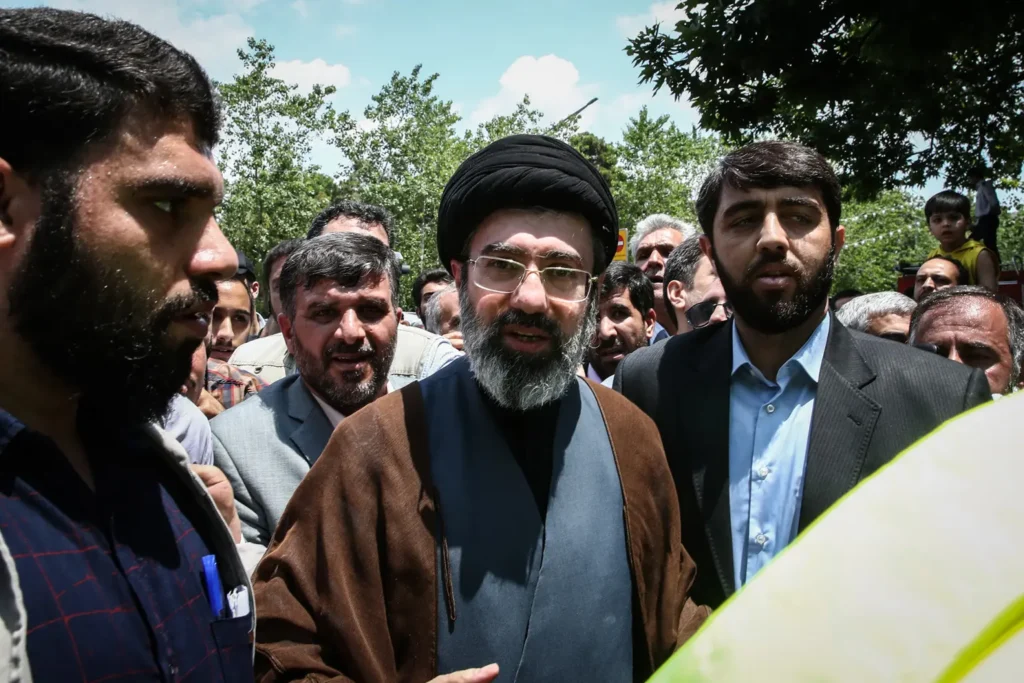
The son of Iranian Ayatollah Ali Khamenei is the front-runner to replace him as supreme leader, according to reports.
Mojtaba Khamenei, 56, is favored to take control of Iran by the country’s Assembly of Experts, a powerful body of clerics that makes the decision, the New York Times reported while citing sources close to the deliberations.
Other outlets — including Israeli media and Iranian opposition channels — were reporting early Tuesday that Mojtaba had already been selected, though Iranian state media have not confirmed anything.
The report was widely being picked up by Israeli media but had not been confirmed by Iranian state mouthpieces.
Mojtaba was at first believed to have been among the 40 top Iranian aides killed during the Saturday strike that took out Iran’s highest-ranking cleric.
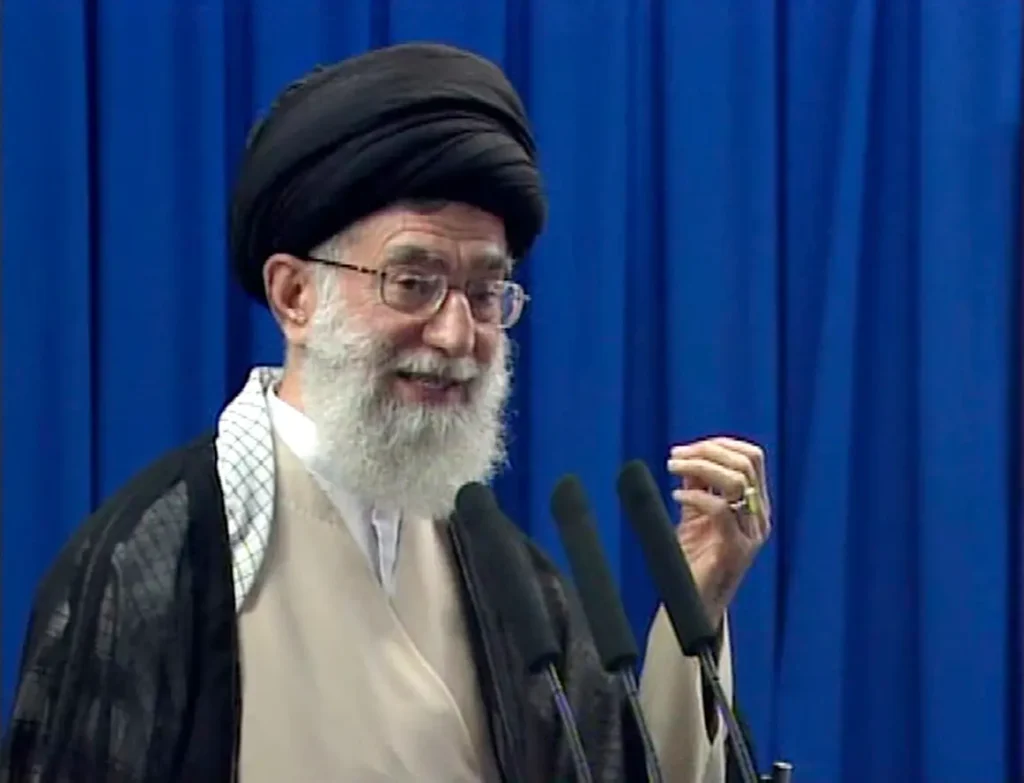
Mojtaba was at first believed to have been among the 40 top Iranian aides killed during the Saturday strike that took out Tehran’s highest-ranking cleric, his despotic 86-year-old father, who ruled Iran with an iron grip for decades.
But reports of his name being floated within leadership succession discussions indicate he is alive — and could be well on the way to furthering his father’s cause of severely anti-Western sentiments.
Motjaba — the ayatollah’s second-oldest son — has been known for his staunch adherence to his father’s hardline conservatism and has close ties to Iran’s notoriously brutal Islamic Revolutionary Guard Corps, according to CNN.
He had no official role in his father’s regime but was still sanctioned by the US in 2019.
If it’s true Mojtaba is leading Iran or about to, that appointment was unexpected.
The country’s officials have traditionally looked down on family succession in its leadership — especially since the current regime seized power by toppling a kinship-fueled monarchy in the 1979 Islamic Revolution.
“If he is elected, it suggests it is a much more hardline Revolutionary Guard side of the regime that is now in charge,” a Johns Hopkins University expert on Iran, Vali Nasr, told the Times.
Other experts said Mojtaba is the “wisest pick” because of how close he is with the highest levels of Iran’s security and military apparatus through the Revolutionary Guard.
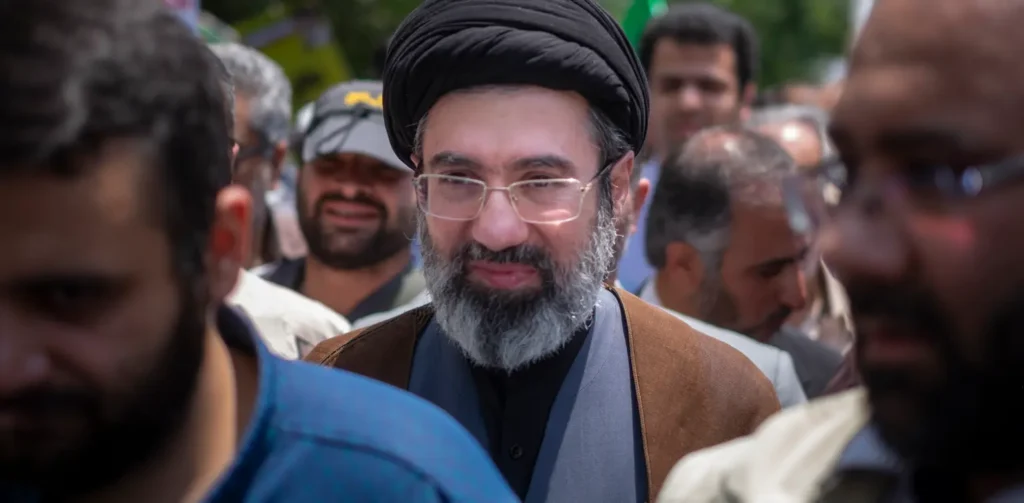
He is intimately familiar with running and coordinating security and military apparatuses,” Iran political analyst Mehdi Rahmati said.
Iran has been in the hands of a three-man council run by two of Ali Khamenei’s top henchmen who survived the strike, with speculation running wild about who would grab power in the vacuum left by the elderly cleric’s death.
The Middle Eastern nation has been plunged into chaos since the strikes, with missiles continuing to fall across the country as it lashes back with rockets and drones at US interests across the region.
The chaos has been compounded by the lack of clarity about who is in charge. Ali Khamenei had not named a clear successor prior to his death, leaving the 88-member Assembly of Experts to make the selection.
Whoever is picked would also need to be cleared by the nation’s Guardian Council, which vets laws and leaders to make sure they are in good standing with strict Islamic codes.
Those expectations made Mojtaba an unlikely choice, as the supreme leader serves as Iran’s religious figurehead as well as the leader of the government.
Mojtaba has no serious religious credentials, which under normal circumstances would put him at risk of a Guardian Council veto, according to the Wall Street Journal.
His close association with his father — whose hardline policies and violent crackdown on Iranian protesters led to the country’s current predicament — were also viewed as a hindrance to his ascension to power. A portion of the public will react negatively and forcefully to this decision, and it will have a backlash,” analyst Rahmati said.
Still, others characterize Mojtaba as a possibly “extremely progressive” pick who could “move to sideline the hardliners.”
See his appointment as a shedding of skin,” said Abdolreza Davari, an Iranian politician who is close to Mojtaba, according to the Times.
How much real power Mojtaba would actually have either way remains unclear.
Ali Khamenei ruled Iran for 37 years, during which time he was able to consolidate a sprawling cult and cadre of cronies insulating him from dissent.