When the US and Israel began striking Iran on Feb. 28, Tehran responded swiftly with waves of ballistic missiles and drones aimed at targets in Israel and neighboring Arab states, particularly those hosting US military bases.
For days afterward, despite the loss of senior leaders and significant damage to its military capacity, Iran has continued to launch missiles and swarms of kamikaze drones at multiple regional targets.
After Supreme Leader Ali Khamenei was killed on Feb. 28, Foreign Minister Abbas Araghchi announced that Iran had activated its “Decentralized Mosaic Defense” strategy.
Developed over two decades by the Islamic Revolutionary Guard Corps, or IRGC, the strategy disperses command structures, weapons systems and operational units across vast geographic and organizational lines so that military functions can continue even under intense attack.
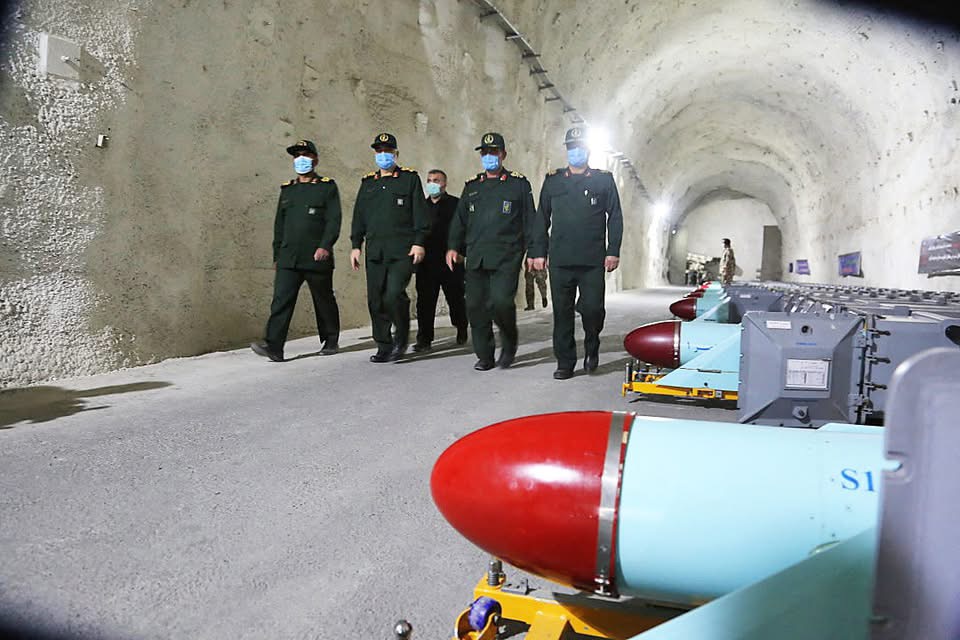
Running parallel to the IRGC is the Ministry of Defense and Armed Forces Logistics, or MODAFL, which oversees Iran’s missile and drone industries — themselves built on a decentralized model.
MODAFL manages a network of state-run and quasi-private entities, including the Aerospace Industries Organization, which handles missile research and production, and the Defense Industries Organization, which oversees conventional arms.
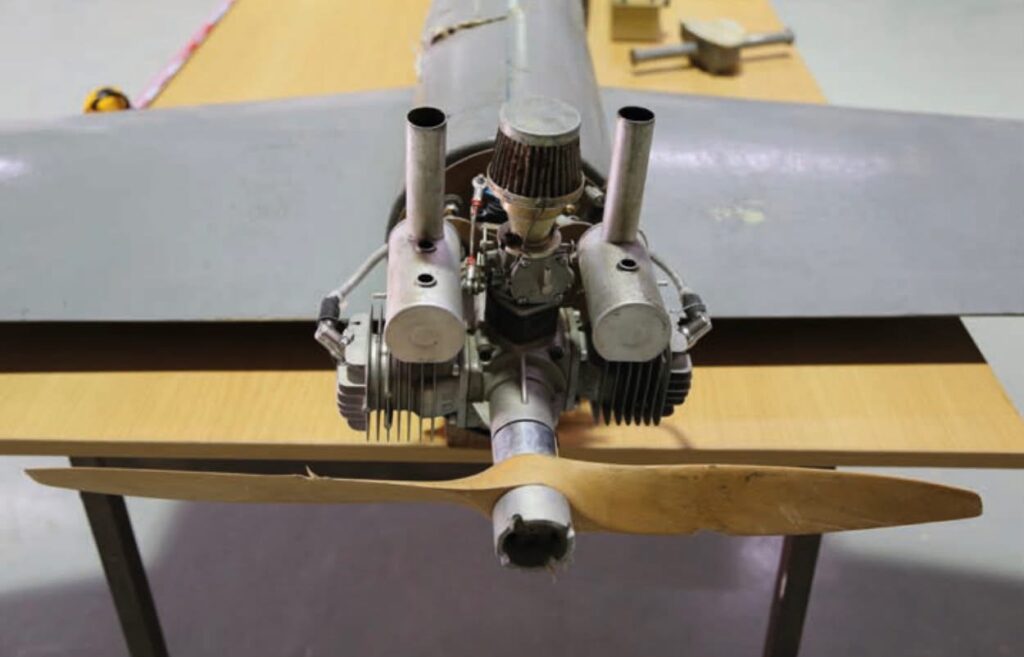
The IRGC maintains its own weapons programs, most notably the Shahed Aviation Industries Research Center, which develops drones such as Shahed-131 and Shahed-136.
This dual structure relies on vast networks of subsidiaries, suppliers and front companies that acquire components while circumventing Western sanctions. Supporting them are privately owned, knowledge-based firms.
In November 2023, Iran’s deputy defense minister, Brig. Gen. Mahdi Farahi, said that the ministry worked with around 7,000 enterprises nationwide, about 40 percent of them knowledge-based companies, according to the IRGC-affiliated Tasnim News Agency.
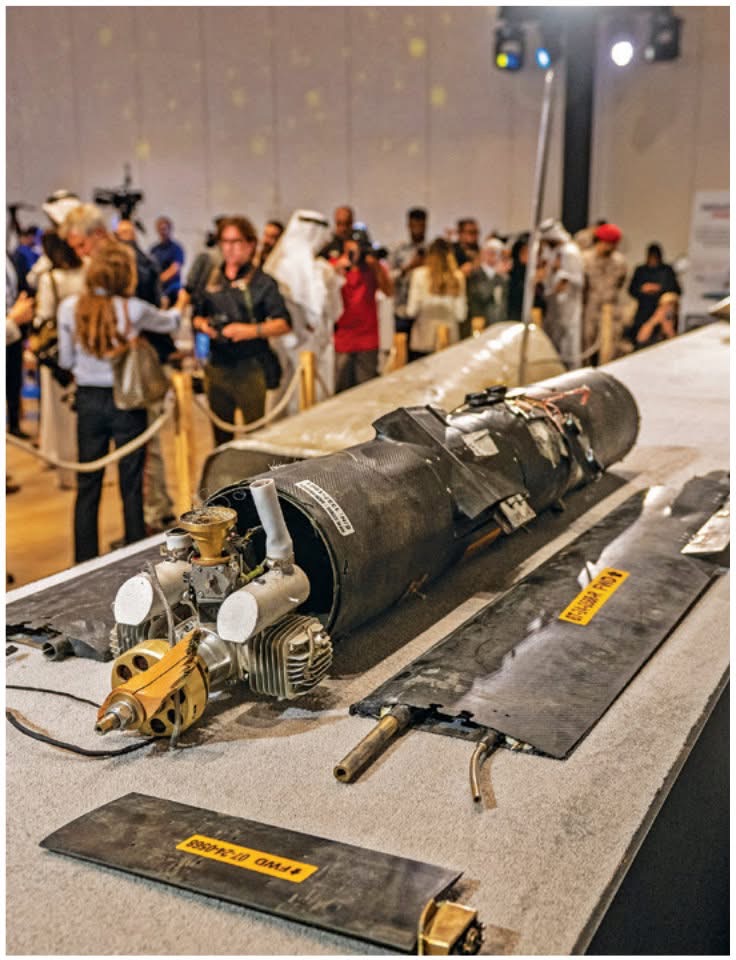
One such firm is Oje Parvaz Mado Nafar, which manufactures and trades unmanned aerial vehicle components. The US Treasury has accused Mado of supplying UAV engines to the IRGC Navy, Iran Aircraft Manufacturing Industries, and Qods Aviation Industries.
These overlapping networks have together helped Iran to amass one of the largest ballistic missile stockpiles in the Middle East, according to the US Office of the Director of National Intelligence.
Iranian officials describe the missile program as the backbone of the nation’s strategic deterrent, particularly as its moribund air force depends on an aging fleet of aircraft.
That capability has now been put to its greatest test yet.
“As we’ve seen during the 12-day war (in June 2025) … Iran’s air defenses are no match for the US and Israeli air power,” Naysan Rafati, a senior Iran analyst at the International Crisis Group, told an online briefing on March 3.
Its network of non-state allies is not what it was two years ago or even a year ago. And so, the Islamic Republic has turned to its most potent and, to a certain degree, only major retaliatory tool, which is ballistic missiles and drones.
“The logic is basically … go big or lose home. Not even go home, but lose home, or at least the system, and try to expand this conflict horizontally when you can’t match what your adversaries can do in terms of air power and other resources.”
The strikes on US bases across the region, he said, reflect the regime’s “sense that its back is against the wall” and its calculation that the Trump administration will face pressure from regional partners to end hostilities rather than accept a prolonged conflict.
Thomas Juneau, a professor at the University of Ottawa’s Graduate School of Public and International Affairs and an associate fellow at London’s Chatham House, told Arab News: “Iran’s missiles and drones are not particularly advanced technologically.
“That is why the success rate when it comes to Iran with missiles or drones targeting the Gulf states or Israel or American assets in the region is clearly under 10 percent.
“We don’t have a precise number, but it is well below 10 percent because a significant proportion of its missiles and drones miss their targets, fail upon launch, or in most cases are intercepted because the interception capabilities of the UAE, Qatar, Saudi Arabia, and obviously Israel, are far more advanced.”
US Central Command, which oversees American military operations in the Middle East, said that the next phase of the campaign will target the launchers, stockpiles and factories sustaining Iran’s missile attacks.
Satellite imagery analyzed by BBC Verify showed at least 11 Iranian naval vessels destroyed or damaged since late February. Missile bases and nuclear sites have also been struck. The US military claimed on March 3 it had destroyed IRGC command facilities and air defense systems.