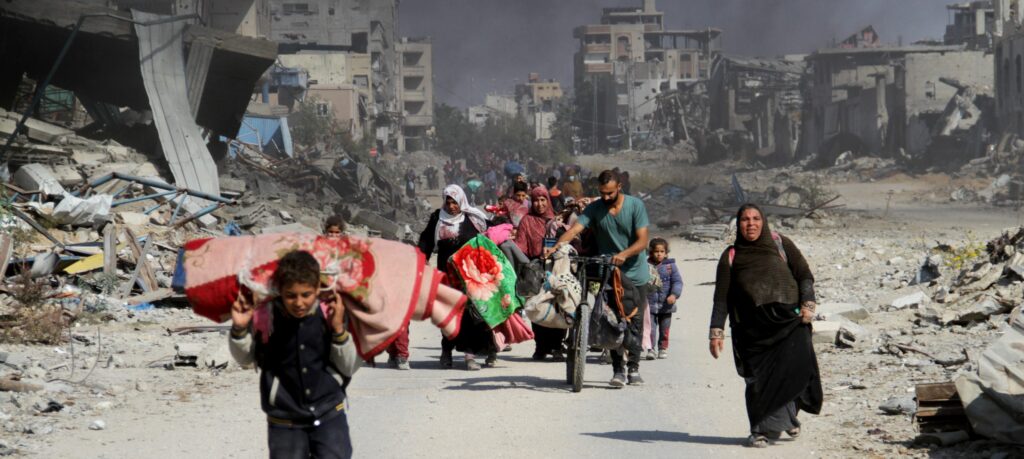
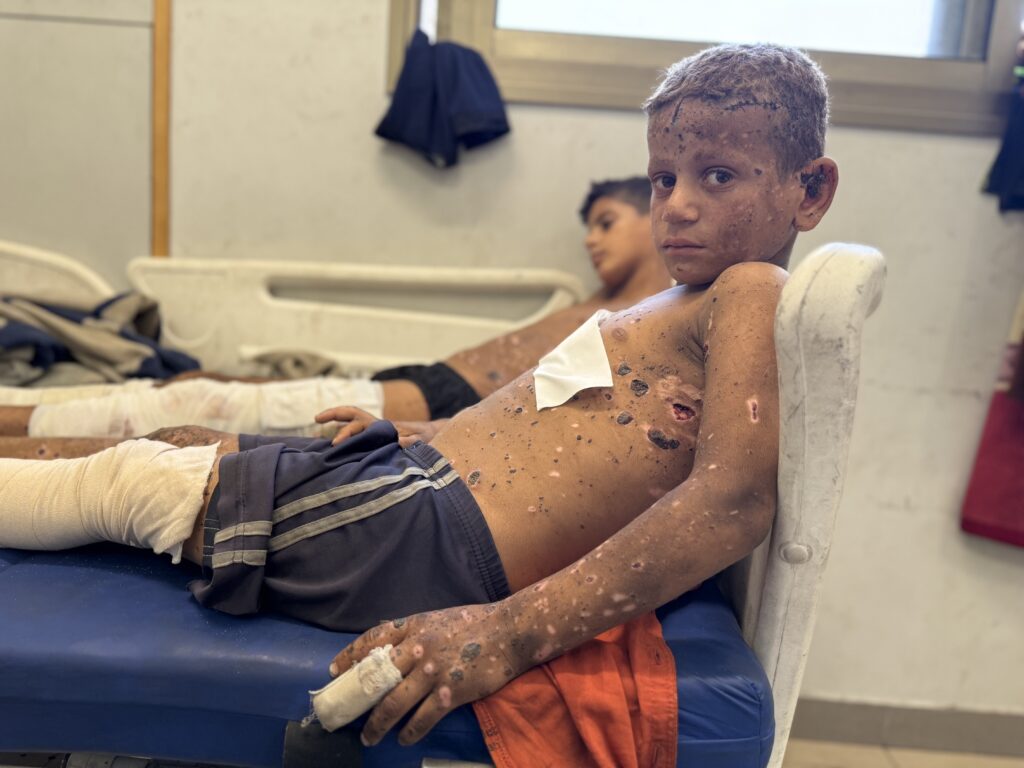
Thousands of Palestinian children in the Gaza Strip have been seriously injured or permanently disabled by the Israeli military in direct, indiscriminate attacks as part of Israel’s ongoing genocidal campaign against Palestinians. Many dream of leaving Gaza to receive medical treatment abroad, but a few have had the chance. Those few face a harsh reality upon arrival in Egypt.
Defense for Children International – Palestine collected testimonies from the parents and caregivers of four children suffering from serious injuries as a result of Israeli attacks in Gaza Strip Israel’s campaign of genocide has collapsed Gaza’s health care system, making it impossible for children to receive the surgeries, medication, physical therapy, and follow-up care that is required to recover from such traumatic injuries.
These children were granted permission to cross the border, but even then, their journey was far from over. Upon arrival in Egypt, instead of the safety and treatment they had hoped for, they were met with a new set of challenges; delays, neglect, harsh conditions, and a lack of adequate medical care, alongside the pain, sorrow and longing for beloved ones.
DCIP’s field researcher in Egypt had to document these cases remotely through video call, as the Egyptian authorities denied permission to visit the injured children. Due to restrictions imposed on access, including denial of permits and hospital visits, direct documentation and in-person interviews were not possible.
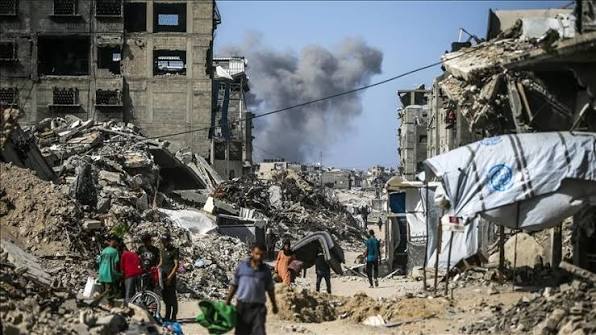
Israeli airstrikes severely damaged our home in Al-Zeitoun neighborhood, east of Gaza City, forcing us to seek refuge in a UNRWA school,” Islam Mohammad Felfel told DCIP.
Islam, a mother of four children, 15-year-old Majd, 12-year-old Yousef, 10-year-old Nader, and 8-year-old Rahaf, was displaced multiple times, saying “After receiving Israeli evacuation warnings, I had no choice but to escape with my family, including my young children, Nader and Rahaf, to Rafah city. We spent nearly four months there, a challenging time for me as my older sons, Majd and Yousef, were still with their father in Gaza City, who refused to evacuate.”
The day after the tragic Al-Kuwait Roundabout massacre, the mother learned during a phone call that her son, Majd, was among the injured. On March 23, 2024, Israeli forces and tanks opened fire on individuals and groups of Palestinian people, killing 19 Palestinians and injuring 23 others, who were attempting to get flour and aid from a convoy in Al-Kuwait Roundabout in Gaza City on March 23, 2024, also known as the second Flour Massacre, after the Al-Rashid Streetmassacre on February 29, 2024.
“Majd had suffered a critical facial injury from an expanding bullet, as well as a bullet wound to his leg,” Islam said.”He was transferred to the Baptist Hospital in Gaza City, but due to the overwhelming number of casualties and the lack of available beds, doctors were forced to perform his surgery in the hospital kitchen. He remained hospitalized for nearly two months, with his condition being critical.”
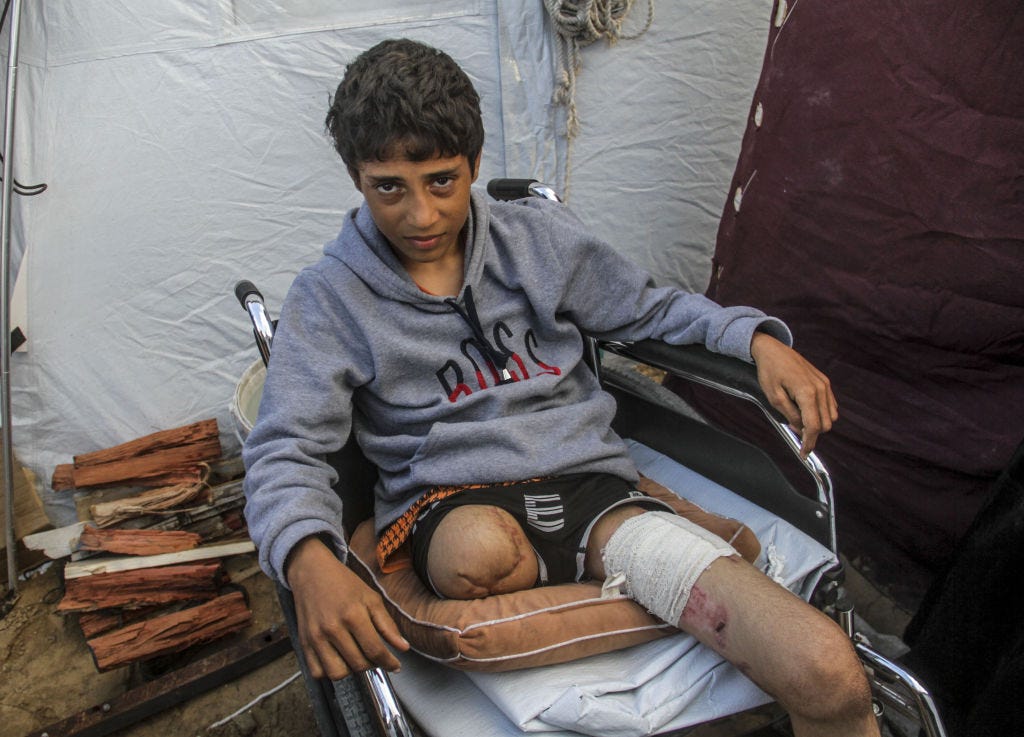
“I later discovered that Majd had been moved to Al-Shifa Hospital in Gaza City for further treatment and a plastic splint had been inserted into his neck to aid his breathing. He stayed there for nearly two more months, but then the Israeli army invaded and took control of the hospital,” Islam told DCIP.
“Despite how serious his condition was, his father decided to bring him home, where he received no medical care at all. I tried to convince Majd’s father to let him come to me in the south so I could take care of him and monitor his condition. At that time, I was living in Khan Yunis after being displaced from Rafah,” the mother recounted.
Just two days after their last conversation, Majd’s mother was stunned to know that her son had escaped on foot to southern Gaza, without his father’s knowledge.
Islam told DCIP, “When I saw him, he was skin and bones that I couldn’t recognize him. He was severely underweight and weak, suffering from an old injury and extreme hunger after months in Gaza City. His deteriorated condition left me in disbelief. He then described how he had crossed the heavily militarized Netzarim checkpoint, controlled by Israeli forces.”
Israeli soldiers detained Majd for an hour, suspicious of the mask covering his injured face. During the interrogation, they questioned his movement toward southern Gaza. Majd explained that he was seeking medical treatment for the serious injuries he had sustained, among them a fractured jaw, missing fragments of facial bone, and severely damaged teeth.
“I took Majd to several hospitals, including Nasser Hospital and the European Hospital in Khan Younis, as well as Al-Aqsa Martyrs Hospital in Deir Al-Balah, where I closely monitored his condition,” Islam said.
“Doctors confirmed that he urgently requires jaw surgery, facial bone grafts, and dental implants, and these treatments that are currently unavailable in Gaza due to the ongoing war and its impact on local hospitals,” she added.
“I submitted a request for a medical referral through the Ministry of Health and the World Health Organization, who assured me that Majd would be able to travel for treatment once a ceasefire is declared and the Rafah crossing is reopened.”
In January 2025, a ceasefire agreement was reached between the Palestinian factions and Israel. However, Majd’s name was not included on the approved travel list, preventing the family from leaving Gaza.
“After the ceasefire, I returned to Gaza City with my children and began searching for ways to secure Majd’s medical evacuation. On February 19, 2025, I received a call confirming we were permitted to travel. I then left the Gaza Strip with Majd and my two other children, Nader and Rahaf. We spent one night at a hospital in Arish, Egypt, before being transferred to the Administrative Capital Hospital in Cairo the next day,” Islam told DCIP.
After arriving at the hospital in Cairo, Egyptian doctors examined Majd and conducted a series of tests to assess his condition. When his mother asked about the next steps for treatment, the medical staff explained that they were waiting for the arrival of a specialist to evaluate Majd’s injuries before determining the appropriate course of action.
“Majd is unable to chew and can only consume soft, easily digestible foods like milk and juice, which I prepare for him. He wears a mask at all times, even in the hospital, because he cannot control the saliva that constantly drips down his chest. This symptom causes him deep embarrassment and has severely affected his mental state. He becomes anxious and withdrawn, insisting that no one sees him in this condition,” Majd’s mother said at the end of her interview.
On the afternoon of September 2, 2024, I was jolted by the sound of two consecutive explosions near my parents’ house. Within a minute, my son, Omar came rushing towards me, crying out in panic. After I managed to calm him down, he told me the bombing had struck the house of my brother Mohammad,” said Shifa Ismail Duqqi, an aunt of four-year-old Hanan and two-year-old Misk, in an interview with DCIP.
One week into the genocide, on October 15, 2023, Shifa was forced to flee her home with her husband and her three children, 11-year-old Omar, nine-year-old Ismail and three-year-old Sham, escaping the terrifying sounds of constant explosions in Jabalia, North Gaza. They made their way to her parents’ house in Deir Al-Balah, in central Gaza, hoping to find safety.
Upon arrival, the family settled in alongside other relatives who had also sought refuge. Her brother, Mohammad Duqqi, who lived 200 meters (656 feet) away with his wife, Shaima and his two daughters, four-year-old Hanan and two-year-old Misk, allowed them to remain close.
“After the strike hit Mohammad’s house, I received an update from my sister Hikmat, who is a radiologist in the Palestinian Red Crescent hospital, upon the arrival of the casualties at the hospital. She informed me that my brother’s wife had been killed. Mohammad was pulled out from under the rubble, suffering multiple injuries and was placed in the ICU. He lost vision in one eye, with shrapnel wounds scattered across his body,” Shifa said.