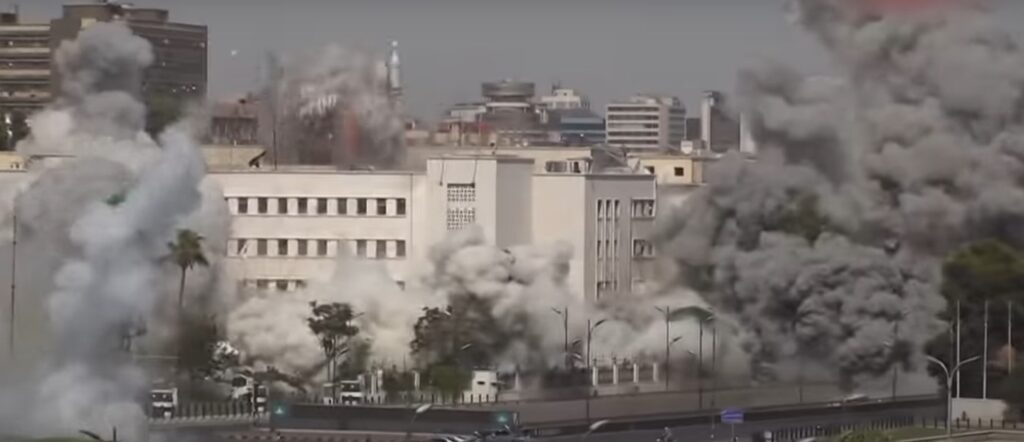
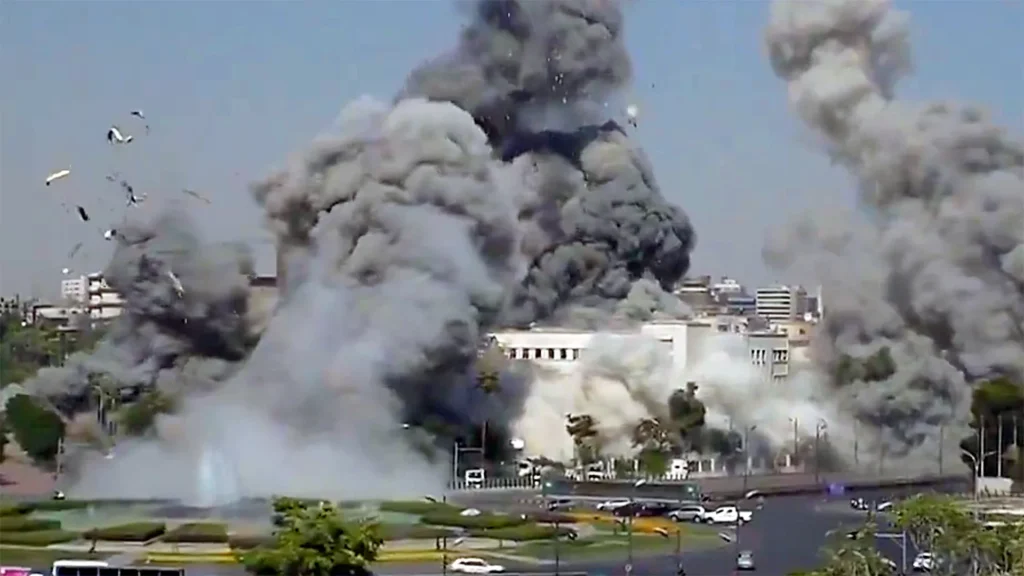
Israel launched a series of devastating strikes on Syria’s capital Damascus Wednesday, dramatically escalating military intervention in the war-torn nation. The attacks targeted multiple government facilities, including the Ministry of Defense and areas near the presidential palace, sending shockwaves through the Syrian government and international community.
The strikes killed at least three people and injured 34 others, marking one of the deadliest Israeli attacks on Syrian government infrastructure in recent months. Syrian television footage captured the Ministry of Defense building being hit during a live broadcast, forcing the anchor to take cover as explosions rocked the capital.
Israel‘s Defense Minister shared the dramatic footage, describing the attacks as the beginning of painful blows against Syrian government forces. The strikes represent a significant escalation in Israel’s military campaign, which has intensified since the fall of the Assad regime last December.
The timing of these attacks coincides with ongoing clashes between Syrian government forces and Druze militias in the southern city of Suwayda, creating a complex multi-front crisis that threatens regional stability. Israel claims its strikes aim to protect the Druze minority, though critics suggest broader political motivations.
Druze community fights for survival
The Druze, an Arab religious minority of approximately one million people, have found themselves at the center of violent confrontations with Syrian government loyalists. This ancient community, which practices an offshoot of Islam that permits no converts and no intermarriage, faces mounting pressure from Sunni extremist forces.
Violence erupted over the weekend between Druze forces and Bedouin tribes in Suwayda, prompting Syrian government intervention that has only intensified the conflict. The Druze community, concentrated in three main provinces near the Israeli-occupied Golan Heights, forms a majority in the Suwayda province where the fiercest fighting has occurred.
The situation deteriorated rapidly as electricity was cut off, mobile service became extremely weak, and internet connectivity nearly collapsed. Water supplies were also disrupted, creating humanitarian concerns for civilians caught in the crossfire between competing armed groups.
Local residents described the situation as dire, with basic services failing and communication networks breaking down. The infrastructure collapse has made it difficult for families to maintain contact with relatives and for humanitarian organizations to assess the full extent of the crisis.
Ceasefire talks collapse amid divisions
Syrian government officials announced a new ceasefire agreement Wednesday, but the deal immediately faced rejection from key Druze leaders, highlighting deep divisions within the minority community. The proposed ceasefire called for a complete halt to military operations and the formation of a monitoring committee with Druze leaders.