Posted inWeapons & Gear Manual
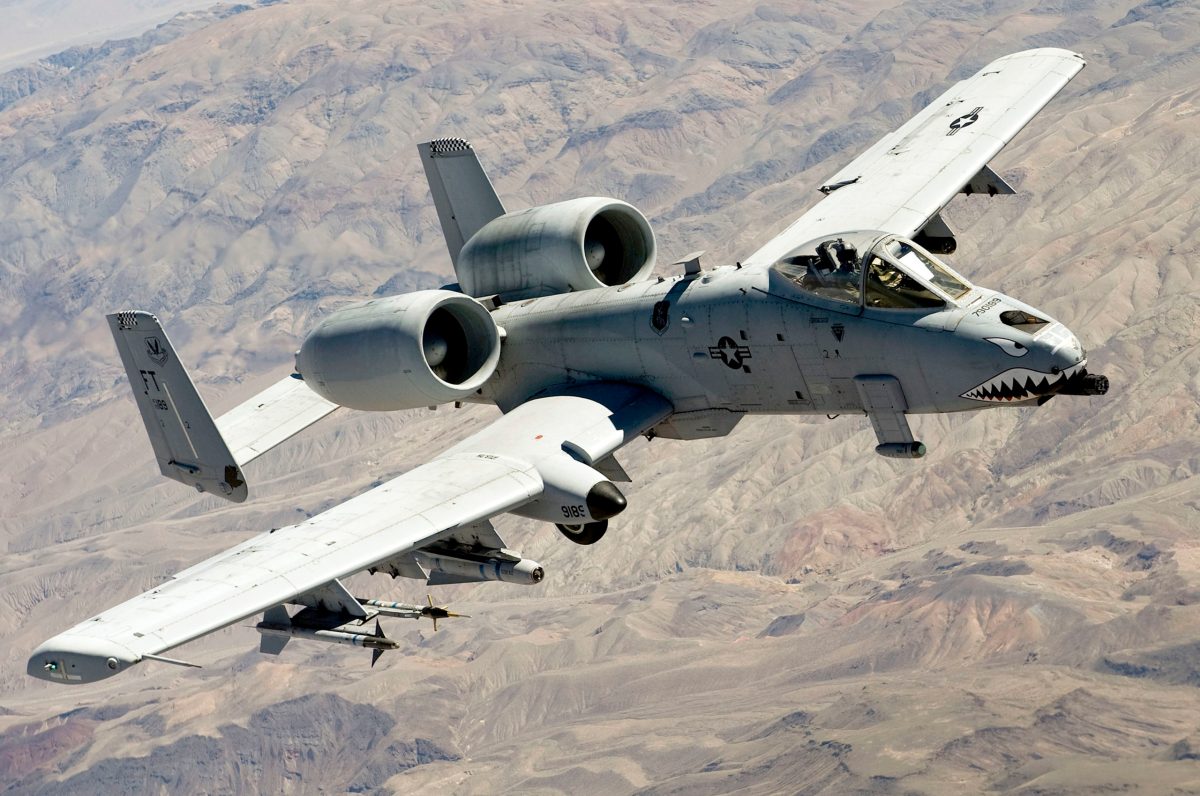
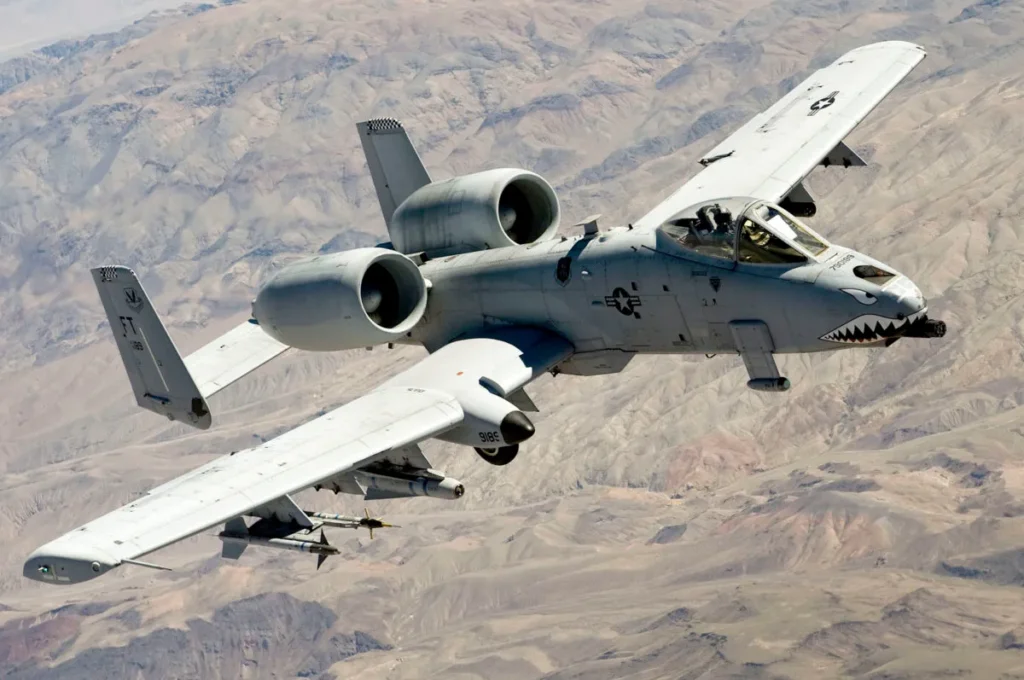
In 1972 the Fairchild Republic A-10 came out of the big aluminum womb ugly, misbegotten and ignored. It seemed fated for a life as the awkward stepchild of its F-plane playmates, the pointy-nose F-15 and F-16, eventually to be joined by the rapacious F-22 and voracious, obese F-35.
The Warthog, as the attack airplane came to be known, finally had its day when it was a 19-year-old virgin with a mustache and, yes, warts, about to be put out to pasture. The A-10 was scheduled for retirement—for the first of several times—when the battle against Soviet T-55, T-62 and T-72 tanks that it had been designed to fight finally erupted. Only not in the Fulda Gap but in Kuwait and Iraq, and the tanks belonged to Saddam, not Stalin. It was called Desert Storm and thankfully not World War III, but overnight the ugly stepchild became the most vicious and powerful armor-killer ever to fly.
Ground attack from the air and what’s today called close air support (CAS) has a surprisingly long history (see “The First Ground-Pounders,”). We think of World War I airplanes as dogfighters and balloon-busters, but the Junkers J.I was the world’s first airplane designed from the wheels up for ground attack. Also the world’s first all-metal production aircraft, it was an enormous sesquiplane with a corrugated, Quonset-hut upper wing twice the span of a Sopwith Triplane’s. It had a tall, vertical exhaust stack that made it look like a flying locomotive and, presaging the A-10’s structure, featured an entirely armored cockpit bathtub. Like the Warthog, it too got an unflattering nickname: the “Moving Van,” thanks to its size, weight and 96-mph top speed.
Though J.Is managed to immobilize a few thin-skinned British tanks, the first effective anti-tank aircraft was the Russian Polikarpov I-15, an open-cockpit biplane fighter flown by the Republican Loyalist side in the 1936-39 Spanish Civil War. I-15s carried four wing-mounted, rapid-fire 7.62mm machine guns, and the total of 50 armor-piercing rounds per second could do serious damage to what passed for armor in that era. Several I-15s created enough chaos among Italian tanks advancing on Madrid that the attack was then broken up by Loyalist infantry.
This caught the attention of the Soviets and led to the legendary Ilyushin Il-2 Shturmovik tank-buster of World War II, an airplane that turned out to be so useful it was produced in greater numbers—more than 36,000—than any other combat aircraft ever built. The Shturmovik also had a heavily armored cockpit plus another valuable characteristic that would show up in the Warthog: It could carry a wide variety of underwing ordnance, including machine guns, cannons, bombs and rockets.
The Germans had also seen the need for a CAS airplane, the Junkers Ju-87 Stuka (see “Screaming Birds of Prey,”). The Luftwaffe’s raison d’être, in fact, was entirely to provide ground support. It was the Wehrmacht’s air arm, and Stukas were initially used as flying artillery working in league with the army’s panzers as they blitzkrieged through Europe. Though the Messerschmitt Me-109 would soon take the title, Stukas were for awhile the most important arrows in the Luftwaffe’s quiver.
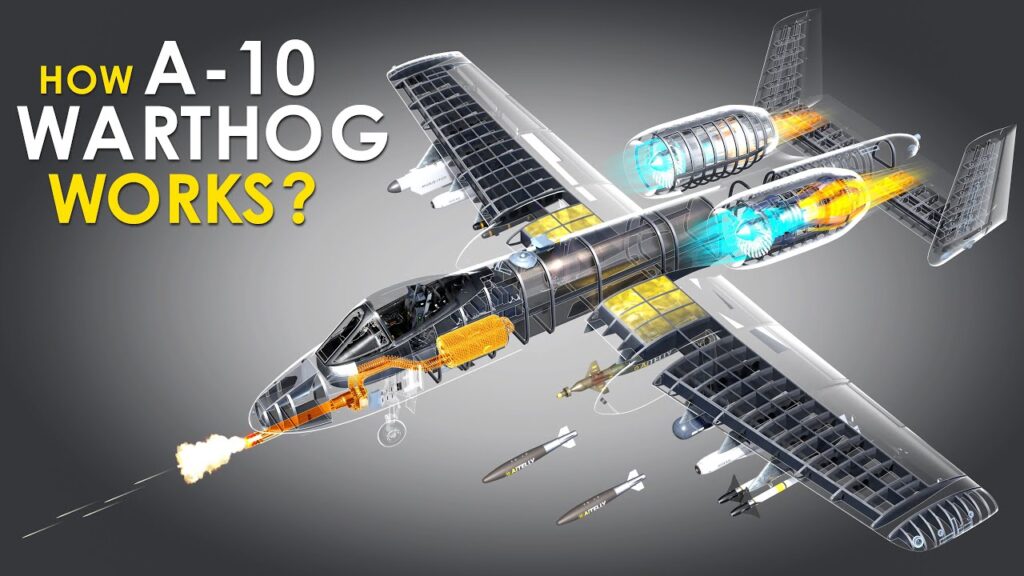
Knowing that the Ju-87 was becoming increasingly obsolescent, the Germans tried their best to develop a more modern tank-buster, the little-known Henschel Hs-129. Its parallels with the A-10, however, are interesting. Both airplanes are twin-engine for redundancy, though the Hs-129’s power plants were not very good. Both the Henschel and the A-10 utilized true “armored bathtubs” for cockpit protection—not just steel-plate fuselage skinning but an internal structure that, in the case of the Hs-129, had sloped sides to increase the effective thickness of the armor. And both carried enormous guns. The Hs-129 is said to have been the first airplane to fire a 30mm cannon in anger, and its final version mounted a 75mm cannon.
But what about the A-10 Thunderbolt II, as it’s officially (but rarely) known? Let’s back up and look at what was behind this shotgun marriage of World War II technology, turbofan engines and a massive piece of artillery, the 30mm Gatling gun that became the A-10’s best-known weapon. Has there ever been an airplane conceived under such miserable conditions? The A-10 story is a painful illustration of just how much flag-rank military thinking is driven by ego, selfishness and greed and how little of it is relevant to war-fighting. Dwight Eisenhower had already called its practitioners the military/industrial complex.
When the Air Force was released from its traditional service as an obedient part of the Army in September 1947, it became a separate and independent branch of the armed forces. The brand-new U.S. Air Force immediately foreswore serious duty working for soldiers on the ground. Let the Army and Marine Corps take care of their own, said the Air Force, our job is flying at the speed of heat, gunning enemy jets, making aces and dropping bombs, preferably nuclear. “Not a pound [of airframe weight] for air to ground” became an Air Force fighter-development principle.
This deal was further ratified in March 1948 by the Key West Agreement. The chiefs of staff and Secretary of Defense James Forrestal sat down in, obviously, Key West and agreed that the Navy could keep its tailhookers (some of which the Marines would of course continue to use for close air support), but that the Army was done forever flying fixed-wing aircraft in combat. They were welcome to play with helicopters, which seemed at the time to be of little consequence, but flying real airplanes was the Air Force’s job. The Army could continue to use aircraft for minor logistics, medevac and recon, but no weapons were allowed to be mounted aboard them.